How to Automate 80% of Tenant Inquiries Using AI (Without Losing the Human Touch)
AI can now handle 80% of tenant inquiries automatically — maintenance requests, lease questions, showing bookings — without a single phone call. Here's the exact setup landlords are using in 2026.
How to Automate 80% of Tenant Inquiries Using AI (Without Losing the Human Touch)
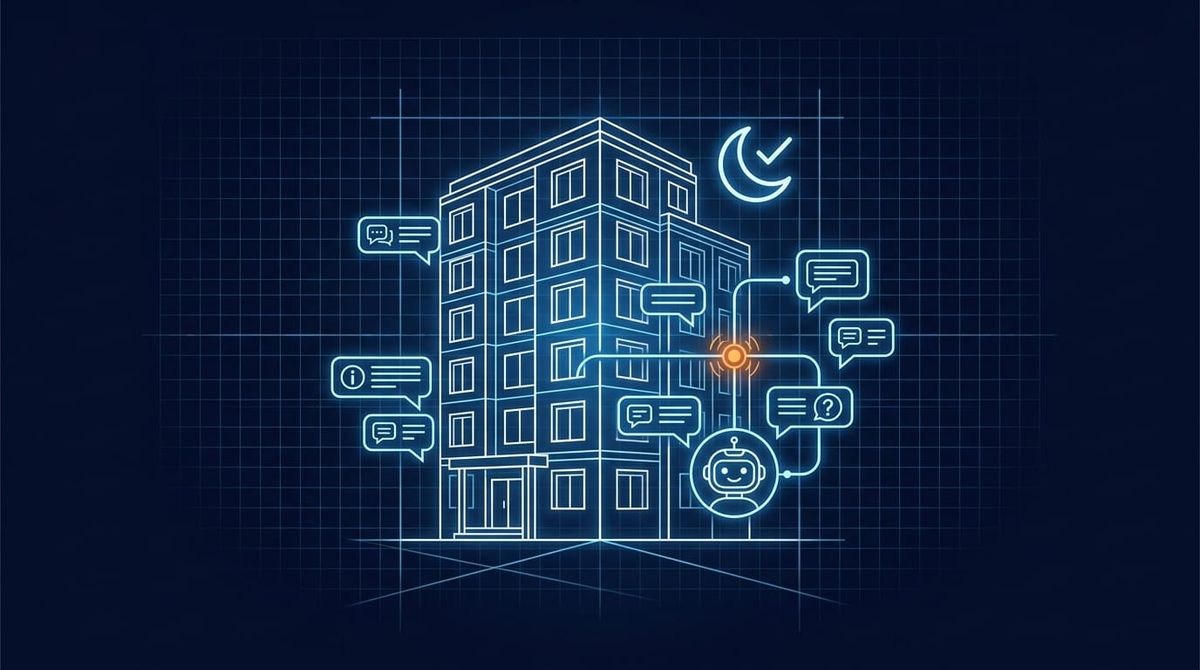
The phone rings at 11:47 PM. It's a tenant — the bathroom faucet is dripping. Not an emergency, but they want it logged. You're asleep.
In 2026, that call doesn't have to wake you. The AI picks it up, logs the maintenance request, categorizes it as non-urgent, notifies your preferred plumber for the next available slot, and sends the tenant a confirmation with an estimated response window. By the time you wake up, the ticket is already moving.
This isn't a hypothetical. It's what landlords running modern AI communication stacks are experiencing right now. The 80% of tenant interactions that are routine — maintenance requests, lease FAQs, showing scheduling, payment reminders — are fully automatable. The 20% that genuinely require a human judgment call get escalated with full context already attached.
Here's exactly how to build that system.
Why 80% Is the Right Target
Not every tenant interaction can or should be automated. The goal isn't to remove humans from the equation — it's to remove humans from the repetitive, low-judgment work so they can focus on interactions that actually matter.
The 80% that AI handles well:
- Maintenance request intake and triage
- Common lease questions (rent due dates, pet policies, parking, renewal terms)
- Showing scheduling for vacant units
- Payment reminders and receipt confirmations
- Move-in/move-out checklist distribution
The 20% that needs a human:
- Complex disputes or complaints
- Lease renegotiations
- Legal notices or eviction-related communications
- Anything involving physical safety
The key is designing your system so the 20% escalates cleanly — not that AI tries to handle everything and fails badly on the edge cases.
Layer 1: Maintenance Request Automation
Maintenance is the highest-volume, most time-consuming category of tenant communication for most landlords. It's also the most automatable.
Buildium's Maintenance Workflow
Buildium handles this end-to-end. Tenants submit requests through the resident portal (web or app). The platform automatically:
- Captures the request with photos and description
- Categorizes by urgency and type
- Creates a work order
- Notifies the appropriate vendor from your preferred list
- Sends the tenant a confirmation with tracking
You're notified of new requests and can monitor status — but you don't have to manually route or follow up. The system does it.
For landlords managing 5+ units, Buildium's maintenance automation alone typically saves 3–5 hours per week. Multiply that by a year and you've recovered 150–250 hours.
The key setup: Spend time upfront building your vendor list and categorization rules. A well-configured system routes a HVAC call to your HVAC vendor and a plumbing call to your plumber without any manual intervention.
Layer 2: Leasing Inquiry Automation
Vacant units generate a flood of inbound inquiries — questions about availability, pricing, pet policies, parking, application requirements. Answering each one manually is a part-time job.
LeaseHawk's AI Leasing Assistant
LeaseHawk deploys an AI that handles inbound calls, texts, and web chats from prospective tenants. The AI knows your unit details, policies, and availability — and responds to inquiries 24/7 without your involvement.
The real differentiator: LeaseHawk handles phone calls with AI voice, not just chat. A prospective tenant calls at 9 PM and gets a real conversation — availability, pricing, pet policy, application process — without a voicemail and a day-long wait for a callback.
The AI qualifies leads (income requirements, move-in timeline, pet situation), schedules showings directly into your calendar, and follows up automatically with prospects who haven't completed applications.
For landlords who lose prospects because they can't respond fast enough, LeaseHawk is the fix.
Layer 3: Ongoing Tenant Communication
Once a tenant is in place, the communication volume doesn't stop. Rent reminders, lease renewal outreach, maintenance follow-ups, seasonal notices — each is automatable.
Buildium's Automated Messaging
Beyond maintenance, Buildium's automated messaging system lets you configure triggered messages for the entire tenant lifecycle:
- Rent due reminders: 5 days before, 1 day before, day of
- Late payment notices: Automatically generated at your configured threshold
- Lease expiration outreach: 90, 60, and 30 days before expiration
- Move-in instructions: Sent automatically on the lease start date
- Maintenance completion confirmations: Closes the loop with tenants automatically
Each message is personalized with tenant name, unit, and relevant details. They look like they came from you — because they effectively did, just without the manual effort.
Layer 4: The Escalation Design
The most important part of any AI communication stack is the escalation path. AI failing gracefully is more important than AI succeeding brilliantly.
Escalation triggers to configure:
- Any message containing legal keywords (attorney, lawsuit, eviction, discrimination)
- Requests categorized as emergency (no heat, no water, gas leak, security issue)
- Tenants who've submitted 3+ unresolved maintenance requests
- Any negative sentiment detected in communications
When escalation triggers, the right system:
- Notifies you immediately with full context (what was said, history with this tenant, open tickets)
- Pauses automated responses so the AI doesn't keep talking while you take over
- Documents everything for your records
This is where most DIY automation setups fail — they automate the easy cases but create chaos on the hard ones. Purpose-built platforms handle this gracefully.
The Full Stack: What This Looks Like in Practice
A landlord managing 15 units with this setup configured:
Morning: Review Buildium dashboard. Three maintenance requests came in overnight — all automatically triaged, work orders created, vendors notified. Two are scheduled for this week. One is marked urgent (no hot water) and you were notified at 7 AM with the vendor already contacted.
During the day: LeaseHawk handled four inquiry calls and two web chats for your vacant unit. Two showings are booked for this weekend. Three prospects didn't qualify and were politely declined by the AI.
Evening: Automated rent reminders went to the three tenants whose rent is due in 5 days. One tenant asked about lease renewal via the portal — Buildium sent the automated 60-day renewal offer you pre-configured.
Your time spent on tenant communication: Under 20 minutes.
Getting the Setup Right
The 80% automation threshold requires proper configuration. Rushing through setup produces a system that's technically running but practically useless.
What to invest time in:
- Build your complete FAQ library in whatever platform handles tenant chat
- Configure your vendor list with categories and availability windows
- Set clear escalation triggers before you go live
- Run the system in monitoring mode for 2 weeks before fully hands-off
The upfront investment is 6–10 hours. The ongoing time savings are 5–10 hours per week for landlords managing 10+ units.